
Phaidon International: Reimagine Your Potential
How do you show recruitment as an empowering career choice?
How do you represent office work on film, particularly in an engaging way? It’s a challenge myself and designer Helen Tsang set out to answer for Phaidon International’s Reimagine Your Potential campaign.
Recruitment is often seen as a ‘fall back’ option for graduates who are unsure of their next move. We wanted to reframe that narrative: to position recruitment as a strategic, global career path that can offer purpose, mobility, and growth.
But how do you avoid shot after shot of phone calls and computer screens, and create something that feels fresh and relevant to a younger audience?
Our solution was to embrace screenlife: a cinematic style that had been gaining momentum since the 2010s, particularly among digital-native audiences. By framing our stories through social media feeds, video calls, flight searches, Slack messages and LinkedIn updates, we created a campaign that reflected how our audience experiences the world: digitally, socially, and in motion.
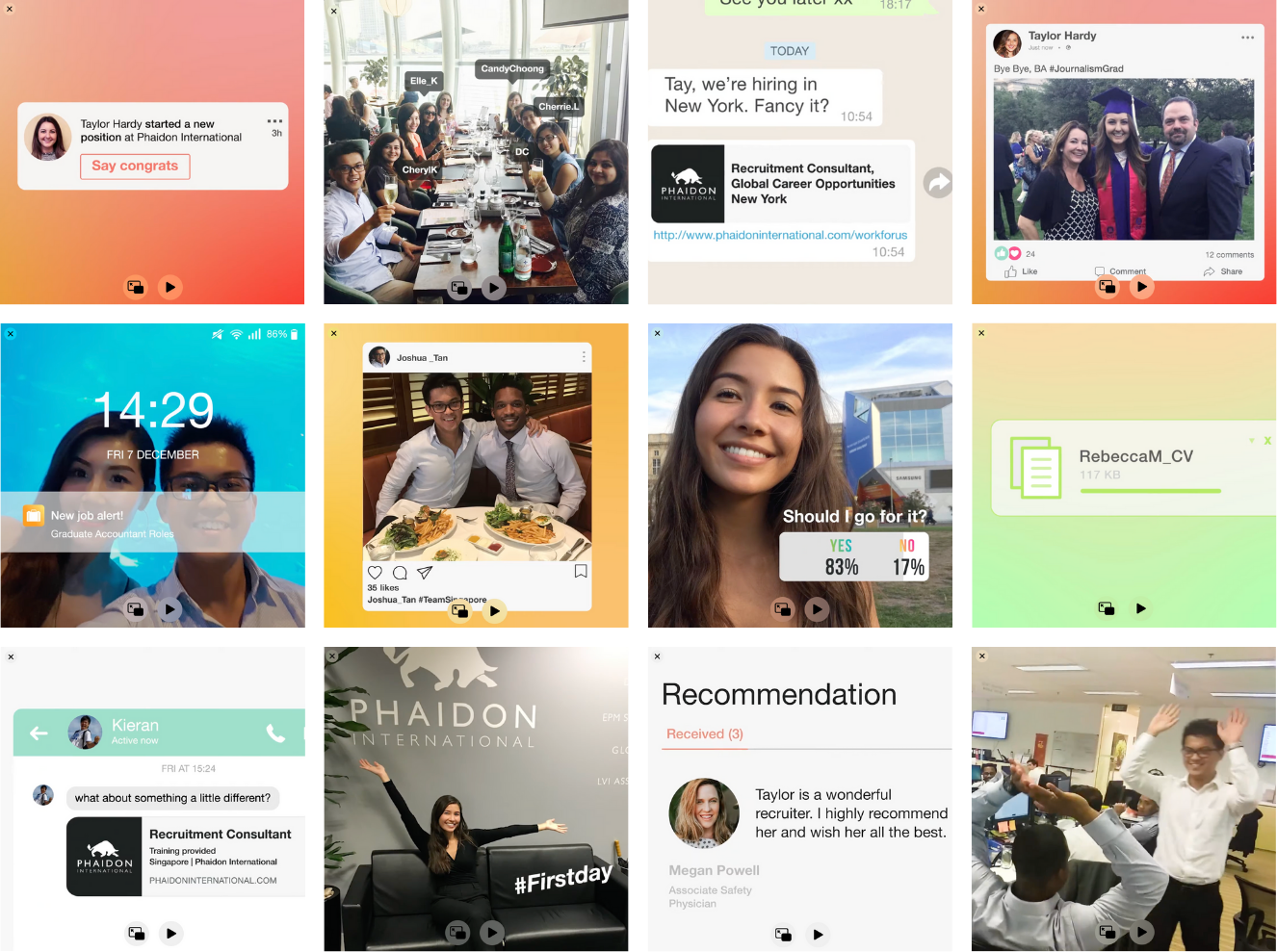
“I was presented with the opportunity to create my own career path; to be rewarded, to progress.”
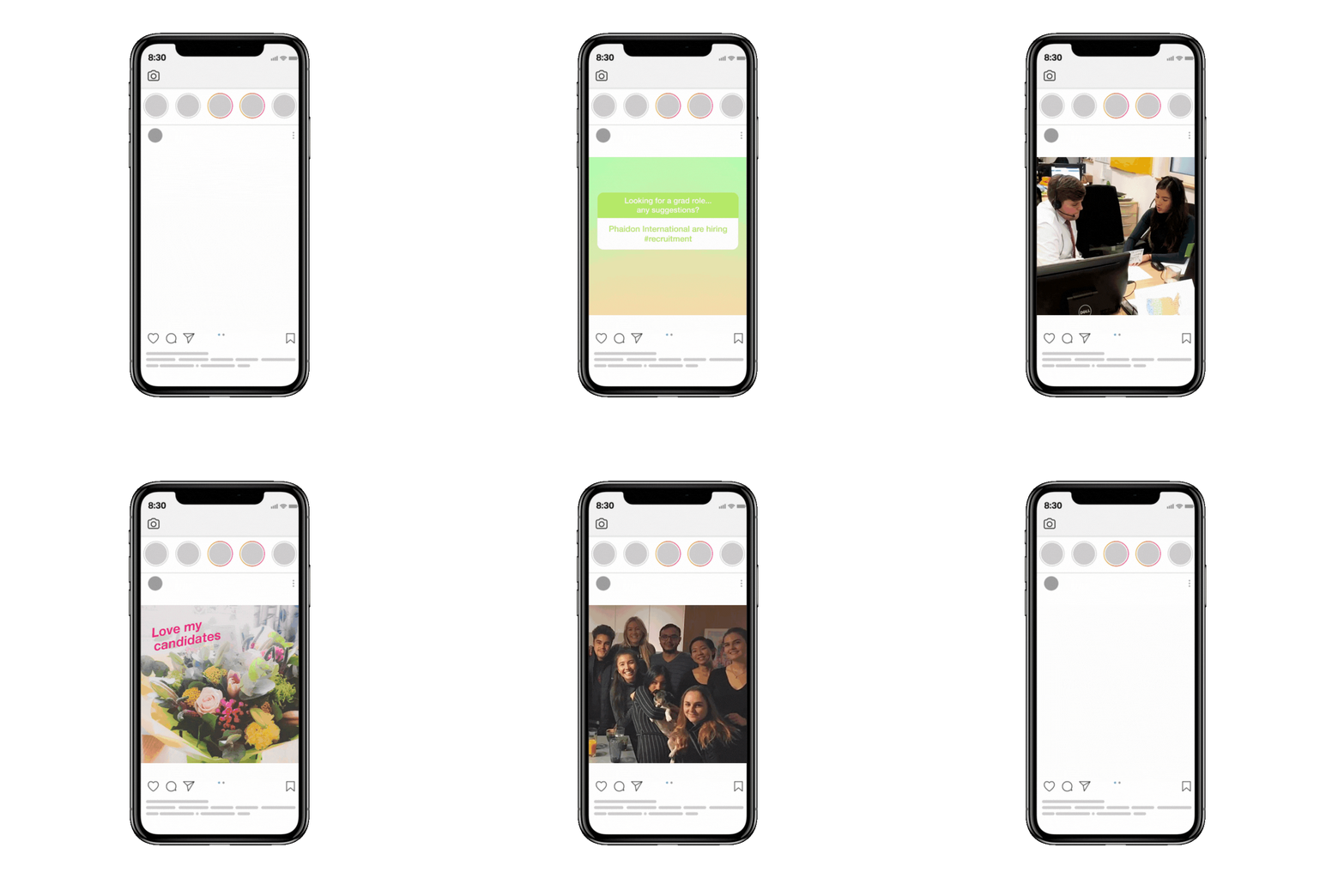
The result was a suite of five scripted, filmed, edited, and promoted adverts that brought these stories to life. These included a hero film following CEO Harry Youtan’s journey from graduate to the top of the company in under a decade. Alongside that, we produced shorter social-first videos featuring Taylor, Joshua, and Rebecca, representing our teams across the Americas, APAC, and Europe. Each video combined screenlife techniques with personal storytelling, showcasing candidate recommendations, glimpses of the hiring process, and the exciting, fast-paced world of international recruitment.
My academic background helped informed our research and creative direction (see, Dad? I told you it was a good idea). One of my interests while studying visual anthroplogy was the difficulting of representing labour. This is particularly true in tertiary industries where so much is done on a computer. Mark Neher’s essay Men at Work touches on this challenge, noting how modern, white-collar labour often resists visualisation in meaningful or dramatic ways.
By using real employees and platform-native storytelling, we made something that I really think felt global, human, and aspirational. Well, whatever we did, it struck a nerve. The campaign earned industry recognition and achieved over 1 million views across all channels: proving that even the hardest-to-visualise work can be brought to life with the right creative lens.